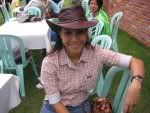
Okay, so my crash dieting during the weekend took its toll on me that I had no choice but to get some protein and carbs in my diet today. I pleaded with my officemates, Michelle, Maryann and sir Deny to eat with me at the Steak House along San Fernando St. --- just after the bridge.
This quaint little restaurant serve steak --- yup we ordered 3 T-bone steak from their menu. We had a choice between rice and mashed potatoes. I love their mashed potatoes and gravy. Michelle ordered Pepper Chicken served with scrambled egg over fried rice. Yummy!
The price is still affordable anywhere from Php 70-150. They serve strawberry and lemonade iced teas and free ice cream dessert!
As usual, with my hunger, I forgot to take pictures! I promise next time, I will! :)
In the meantime, good bye diet!
For directions, check out this map. :)
Monday, March 30, 2009

Friday, March 27, 2009
Chinese New Year
Better late than never. I just retrieved this clip from my mobile phone of the Chinese New Year celebration. My officemates and I during lunch went around Binondo to watch the lion dance. This one was taken infront of BDO along Quintin Paredes. The dragon dancers even went in the bank to their dance. :)
Binondo became a fair ground during this day with lots of peddlers selling their wares and stores like Eng Bee Tin selling their tikoy. Yup, I even lined up that day to buy tikoy! :)
Binondo became a fair ground during this day with lots of peddlers selling their wares and stores like Eng Bee Tin selling their tikoy. Yup, I even lined up that day to buy tikoy! :)
Lunching at Mr. Ube Rice and Noodle House
I have been craving for Mr. Ube's Japanese Shoyu for days but my lunch mate who is also fond of Mr. Ube has been pretty busy lately and it'll take a crowbar to separate her from her laptop. So when my friend Odette sent word that she's coming to Binondo for lunch, I immediately told her we'd go to Mr. Ube.
Long before I met its owner Gerry Chua, I was already going to Mr. Ube for lunch. When I first set foot in the small restau, I was impressed with the automatic sliding door --- this is so atypical of a Chinese restau in Binondo. Common for all Gerry's stores, the place is dominated by purple / ube colors. Two of my favorites are Lechon Macau and Mr. Ube's pancit version. One of my bosses, Sir Deny who's also a frequent customer, loves their Sukiyaki.
So anyway last Wednesday, Odette dined on Lechon Macau and Siomai while I was able to satiate my craving for Japanese Shoyu. Thanks Odette for footing the bill! :)
Odette's Lechon Macau

Odette's Siomai

The remains of my Japanese Shoyu (I forgot to take the photo before I started eating! Obvious ba na gutom?!)

Mr. Ube Rice and Noodle House is found along Ongpin St. beside Lord Stow's and infront of Mercury Drug.
Long before I met its owner Gerry Chua, I was already going to Mr. Ube for lunch. When I first set foot in the small restau, I was impressed with the automatic sliding door --- this is so atypical of a Chinese restau in Binondo. Common for all Gerry's stores, the place is dominated by purple / ube colors. Two of my favorites are Lechon Macau and Mr. Ube's pancit version. One of my bosses, Sir Deny who's also a frequent customer, loves their Sukiyaki.
So anyway last Wednesday, Odette dined on Lechon Macau and Siomai while I was able to satiate my craving for Japanese Shoyu. Thanks Odette for footing the bill! :)
Odette's Lechon Macau

Odette's Siomai

The remains of my Japanese Shoyu (I forgot to take the photo before I started eating! Obvious ba na gutom?!)

Mr. Ube Rice and Noodle House is found along Ongpin St. beside Lord Stow's and infront of Mercury Drug.
Tuesday, March 24, 2009
Manang Yema
I try. Yes I try. I really, really try --- to stay away from sweets but I. JUST. CAN’T. Sigh.
At least I can’t say no to Manang selling yema in Hormiga St. where our office is situated. I was actually winning over my wanting to eat yema but noooo my new officemate had to buy packs of yema and gave us one each. Aaaargh. So there ends my self-control as I now buy 2 packs of yemas a day (10 small pieces/pack) --- except for Monday when Manang Yema is on leave because she does the laundry. Hehe.
Anyway, the bite-size yemas are addicting and once you open a pack you really can’t stop. The trouble is, they are so small so you’d think you aren’t eating a lot except that you find yourself with an empty pack in less than 3 minutes. THAT BAD!
The nice thing (or bad thing whichever way you look at it) about Manang Yema is that she gives you free yema for each pack you buy. Haaay! How can you not love her?!?
If you are craving for yema during workdays, you can find Manang at Hormiga St. around lunch time (except for Mondays --- that’s laundry day!).
At least I can’t say no to Manang selling yema in Hormiga St. where our office is situated. I was actually winning over my wanting to eat yema but noooo my new officemate had to buy packs of yema and gave us one each. Aaaargh. So there ends my self-control as I now buy 2 packs of yemas a day (10 small pieces/pack) --- except for Monday when Manang Yema is on leave because she does the laundry. Hehe.
Anyway, the bite-size yemas are addicting and once you open a pack you really can’t stop. The trouble is, they are so small so you’d think you aren’t eating a lot except that you find yourself with an empty pack in less than 3 minutes. THAT BAD!
The nice thing (or bad thing whichever way you look at it) about Manang Yema is that she gives you free yema for each pack you buy. Haaay! How can you not love her?!?
If you are craving for yema during workdays, you can find Manang at Hormiga St. around lunch time (except for Mondays --- that’s laundry day!).
Food Glorious Food
Binondo is Manila’s food haven. I have dined in its dingiest and plushiest Chinese restos. But that is not the topic here right now. I am talking about the normal office food you eat during lunch. Since in our office, we have an hour and a half to kill for lunch, we could usually go two blocks down Salazar St. for a meal. But in times when we’re all busy with work and can’t go out to buy something to eat, we call on our trusty food stop, RJ’s.
RJ’s is along Quintin Paredes Road and offers a lot of dishes including chicken, mami, GG, gulay guisado, etcetera, etcetera. But our default viands are their specialties, Pork Barbecue and Rellenong Bangus (the middle part please!). We just call them up for delivery with no extra charge except that you have to pay extra for the styro. Even with the charge on the styro, their meals are affordable ranging from Php40-70. You can even request for free soup even for deliveries!
They deliver anywhere in Binondo I think. Haha. Call them up at 2411337.
RJ’s is along Quintin Paredes Road and offers a lot of dishes including chicken, mami, GG, gulay guisado, etcetera, etcetera. But our default viands are their specialties, Pork Barbecue and Rellenong Bangus (the middle part please!). We just call them up for delivery with no extra charge except that you have to pay extra for the styro. Even with the charge on the styro, their meals are affordable ranging from Php40-70. You can even request for free soup even for deliveries!
They deliver anywhere in Binondo I think. Haha. Call them up at 2411337.
Gerry Chua (re-post from My Thoughts on Paper)
Masigasig behind the scenes
I get awestruck when I meet successful people. After every encounter, I get charged up, raring to take on the world and hopefully be successful myself. Thanks to my stint with Masigasig, I met some interesting people who shared inspiring stories. So far, I have managed to get to the revved up part. The part where I have to release the brakes and let the career car accelerate has not happened yet. I just really, truly hope that I find the courage to put down the handbrake and just let it roll.
My last interview for the year was with Gerry Chua, the famous hopia maker, the brains behind the much copied hopia ube, and the owner of Eng Bee Tin. Who would have thought that this man had to go through so many trials before finally, making Eng Bee Tin a household name?
I sneaked out of the office during the lunch hours to meet up with Gerry. The Masigasig team met up at the Café Mezzanine. The café decorated with firemen hats, paraphernalia and articles on fire mishaps, is the Binondo Fire Volunteers hang out. It’s also one of Gerry’s business ventures with the revenues going into his passion --- to the fire volunteers of his community. Acky, the photographer, was busy cleaning his camera lens while eating brunch. Jen, our make up artist, came in full body armor with 2 huge bags of make up kits. Sunshine and Mems our Summit Media connection, came in last and had brunch while we wait for Gerry.
First Impressions
Dressed in his ube-colored fire volunteer shirt, Gerry stepped into the café and greeted most of the customers, who he knew mostly by name. You can’t miss him. He was elected Barangay Chairman in Binondo the day before and was exchanging thanks with the people around. He had this relaxed air around him.
After chatting with his customers and his crew, he sat down with Jen for his makeup session. Jen put on her wonderbelt filled with brushes and laid on the table every make up imaginable. All throughout the session, Gerry would be talking to other customers near him. It was a wonder how Jen was able to spruce him up with all the gab going around. Changing into his ube-colored polo shirt, Gerry was ready for his photo shoot. He was so happy with his look that he asked for Jen’s calling card.
One of the early customers that day was his teacher in grade school, San Lorenzo Ruiz, which was just right across the café. His teacher couldn’t help but smile as Gerry recounted the story that he used to come to school with nothing because of poverty. Raising his hand, he swore that it was his teacher who used to give him pencils so that he can do his school work, “Di ako sinungaling, nagsasabi ako ng totoo. Siya nagbibigay ng pencil sa kin.” He’d add, “tingnan niyo teacher ko, mas mukhang matanda na ko sa kanya.” We all laughed. This guy was something else. Honestly, I really thought we’d be meeting a starched up, stiff businessman, but here was Mr. Gerry Chua, all smiles with a humor of a kid.
The Shoot
While Gerry was being made up, Mems, the art director was collaborating with Acky on the food styling. One of the crew brought us all the flavors of Eng Bee Tin hopia: ube, monggo, baboy, ube-pastillas, ube-langka, ube-queso, and ube monggo lite. I loved the shots they took! Masigasig December is gonna be something else! It’s the last of the series but we’re gonna go out with a bang!
Next in our things to do is the photo shoot of Gerry with his products. We all trooped down the café and into Chuan Kee restaurant --- yet another of Gerry’s handed down to him by his ninong who he helped nurse back to health after a bout of bone pneumonia in the 80s. He even had to close down his stores then to fully devote his time to helping out his ninong. Gerry helped bring down Jen’s bags and handed her a box of hopia goodies. Jen said her goodbyes and was off to another shoot in Sofitel.
From Chuan Kee, we walked a few meters to 628 Ongpin St., where Eng Bee Tin began and still is the center of operations. In all the outlets I’ve visited in the vicinity, this was by far their busiest. There never seem to be a lull in the number of people lined up at the cashier. The shelves are stocked to the brim with hopia and other Chinese delicacies. In between shoots, Gerry would be welcoming his customers and shouting instructions to his staff. The kids around even knew Gerry and would be tugging at Acky’s shirt to see the shots he has taken. It was a delight too when Gerry’s second son (who was as tall as him) went by and had a few shots taken with him. Whaddya know? He’s a dad too.
Story Telling
Gerry wanted to promote his Mr. Ube Rice and Noodle House just up the street of Ongpin. As we ambled to the diner, Gerry explained that the first PhP4.5M revenue from the year-old business (it opened in October 23, 2006 in celebration of his wife’s birthday) will be used to purchase an ambulance for the community. Wow.
Since I’ve been working in Binondo since August, I’ve visited Mr. Ube twice. The food is excellent and the noodles taste like it’s homemade. And we found out why. Gerry told us the story of an 80 year old Japanese guy who he met in Japan in one of his hopia-maker and packaging machine-hunting trips. With his friend, Mr. Yoshida, they ate at the old man’s noodle house in one of their stopovers. The old man enjoyed their conversation and found it interesting that Gerry is a firefighter. Gerry, at age 16, started volunteering as a firefighter. In jest, Gerry told the old man that if he ever decides to visit the Philippines, he’d give the man a tour of the city plus accommodations. Little did he know that the old man will take his offer to heart.
A couple of weeks after they got back from Japan, they gave the old man a tour of Manila. Grateful for Gerry’s hospitality, the old man sent him a noodle maker machine complete with instruction set and noodle recipes. And thus, Mr. Ube was born.
It was lunch time when we reached Mr. Ube so we ordered Maki Mi, Mr. Ube noodle, and dimsum. Throughout the meal, Gerry entertained us with his story.
He started by saying that when he took hold of the business at 21 years old, Eng Bee Tin was bankrupt. Gerry, being the eldest, had to find funds to finance the checks they’re paying their suppliers. He knew if the money don’t get to the bank by noon, word will spread like wildfire in the streets of Binondo and their suppliers would not deliver their supplies. The manager of the bank where Eng Bee Tin has an account saw how hard Gerry worked and did his best to meet the deadline. And so she, gave Gerry a leeway of 2 hours for which Gerry was grateful. It gave him additional time to look for money and for the store to sell its products.
One fateful day though, the manager was out and the assistant refused Gerry’s late payment. It was 2 pm. Gerry was unable to persuade the assistant to accept his money and like a scene from a telenovela, he cried in the bank.
But who’s laughing now? Eng Bee Tin has grown and even exports its products globally. He has a factory at Paco, Manila, 90 employees, 9 outlets and 70 dealers nationwide. His hopia ube was key to his success coupled with Cory Quirino’s feature of Eng Bee Tin in the late 80s.
He said though that it was through fire volunteering that really made him who he is now. If it hadn’t been for the CityLine episode on Binondo where he helped give Cory Quirino and her crew a tour of their firefighting facilities, he wouldn’t have known the host. He is forever indebted to Cory he says. That’s why now, he devotes most of his time to the fire volunteer efforts. He donated fire trucks and even started the TXT-FIRE program.
By the time, he finished his story it was almost 1:30 pm. And we were unable to eat all the food he ordered. I had to get back to the office. LOL. For the full story on Eng Bee Tin, I guess we’d have to wait for the Masigasig December issue.
Acky, Mems, Shine and I left altogether with loads of kwento, photos and a boxful of hopia each. Not bad for our last interview of the year.
I get awestruck when I meet successful people. After every encounter, I get charged up, raring to take on the world and hopefully be successful myself. Thanks to my stint with Masigasig, I met some interesting people who shared inspiring stories. So far, I have managed to get to the revved up part. The part where I have to release the brakes and let the career car accelerate has not happened yet. I just really, truly hope that I find the courage to put down the handbrake and just let it roll.
My last interview for the year was with Gerry Chua, the famous hopia maker, the brains behind the much copied hopia ube, and the owner of Eng Bee Tin. Who would have thought that this man had to go through so many trials before finally, making Eng Bee Tin a household name?
I sneaked out of the office during the lunch hours to meet up with Gerry. The Masigasig team met up at the Café Mezzanine. The café decorated with firemen hats, paraphernalia and articles on fire mishaps, is the Binondo Fire Volunteers hang out. It’s also one of Gerry’s business ventures with the revenues going into his passion --- to the fire volunteers of his community. Acky, the photographer, was busy cleaning his camera lens while eating brunch. Jen, our make up artist, came in full body armor with 2 huge bags of make up kits. Sunshine and Mems our Summit Media connection, came in last and had brunch while we wait for Gerry.
First Impressions
Dressed in his ube-colored fire volunteer shirt, Gerry stepped into the café and greeted most of the customers, who he knew mostly by name. You can’t miss him. He was elected Barangay Chairman in Binondo the day before and was exchanging thanks with the people around. He had this relaxed air around him.
After chatting with his customers and his crew, he sat down with Jen for his makeup session. Jen put on her wonderbelt filled with brushes and laid on the table every make up imaginable. All throughout the session, Gerry would be talking to other customers near him. It was a wonder how Jen was able to spruce him up with all the gab going around. Changing into his ube-colored polo shirt, Gerry was ready for his photo shoot. He was so happy with his look that he asked for Jen’s calling card.
One of the early customers that day was his teacher in grade school, San Lorenzo Ruiz, which was just right across the café. His teacher couldn’t help but smile as Gerry recounted the story that he used to come to school with nothing because of poverty. Raising his hand, he swore that it was his teacher who used to give him pencils so that he can do his school work, “Di ako sinungaling, nagsasabi ako ng totoo. Siya nagbibigay ng pencil sa kin.” He’d add, “tingnan niyo teacher ko, mas mukhang matanda na ko sa kanya.” We all laughed. This guy was something else. Honestly, I really thought we’d be meeting a starched up, stiff businessman, but here was Mr. Gerry Chua, all smiles with a humor of a kid.
The Shoot
While Gerry was being made up, Mems, the art director was collaborating with Acky on the food styling. One of the crew brought us all the flavors of Eng Bee Tin hopia: ube, monggo, baboy, ube-pastillas, ube-langka, ube-queso, and ube monggo lite. I loved the shots they took! Masigasig December is gonna be something else! It’s the last of the series but we’re gonna go out with a bang!
Next in our things to do is the photo shoot of Gerry with his products. We all trooped down the café and into Chuan Kee restaurant --- yet another of Gerry’s handed down to him by his ninong who he helped nurse back to health after a bout of bone pneumonia in the 80s. He even had to close down his stores then to fully devote his time to helping out his ninong. Gerry helped bring down Jen’s bags and handed her a box of hopia goodies. Jen said her goodbyes and was off to another shoot in Sofitel.
From Chuan Kee, we walked a few meters to 628 Ongpin St., where Eng Bee Tin began and still is the center of operations. In all the outlets I’ve visited in the vicinity, this was by far their busiest. There never seem to be a lull in the number of people lined up at the cashier. The shelves are stocked to the brim with hopia and other Chinese delicacies. In between shoots, Gerry would be welcoming his customers and shouting instructions to his staff. The kids around even knew Gerry and would be tugging at Acky’s shirt to see the shots he has taken. It was a delight too when Gerry’s second son (who was as tall as him) went by and had a few shots taken with him. Whaddya know? He’s a dad too.
Story Telling
Gerry wanted to promote his Mr. Ube Rice and Noodle House just up the street of Ongpin. As we ambled to the diner, Gerry explained that the first PhP4.5M revenue from the year-old business (it opened in October 23, 2006 in celebration of his wife’s birthday) will be used to purchase an ambulance for the community. Wow.
Since I’ve been working in Binondo since August, I’ve visited Mr. Ube twice. The food is excellent and the noodles taste like it’s homemade. And we found out why. Gerry told us the story of an 80 year old Japanese guy who he met in Japan in one of his hopia-maker and packaging machine-hunting trips. With his friend, Mr. Yoshida, they ate at the old man’s noodle house in one of their stopovers. The old man enjoyed their conversation and found it interesting that Gerry is a firefighter. Gerry, at age 16, started volunteering as a firefighter. In jest, Gerry told the old man that if he ever decides to visit the Philippines, he’d give the man a tour of the city plus accommodations. Little did he know that the old man will take his offer to heart.
A couple of weeks after they got back from Japan, they gave the old man a tour of Manila. Grateful for Gerry’s hospitality, the old man sent him a noodle maker machine complete with instruction set and noodle recipes. And thus, Mr. Ube was born.
It was lunch time when we reached Mr. Ube so we ordered Maki Mi, Mr. Ube noodle, and dimsum. Throughout the meal, Gerry entertained us with his story.
He started by saying that when he took hold of the business at 21 years old, Eng Bee Tin was bankrupt. Gerry, being the eldest, had to find funds to finance the checks they’re paying their suppliers. He knew if the money don’t get to the bank by noon, word will spread like wildfire in the streets of Binondo and their suppliers would not deliver their supplies. The manager of the bank where Eng Bee Tin has an account saw how hard Gerry worked and did his best to meet the deadline. And so she, gave Gerry a leeway of 2 hours for which Gerry was grateful. It gave him additional time to look for money and for the store to sell its products.
One fateful day though, the manager was out and the assistant refused Gerry’s late payment. It was 2 pm. Gerry was unable to persuade the assistant to accept his money and like a scene from a telenovela, he cried in the bank.
But who’s laughing now? Eng Bee Tin has grown and even exports its products globally. He has a factory at Paco, Manila, 90 employees, 9 outlets and 70 dealers nationwide. His hopia ube was key to his success coupled with Cory Quirino’s feature of Eng Bee Tin in the late 80s.
He said though that it was through fire volunteering that really made him who he is now. If it hadn’t been for the CityLine episode on Binondo where he helped give Cory Quirino and her crew a tour of their firefighting facilities, he wouldn’t have known the host. He is forever indebted to Cory he says. That’s why now, he devotes most of his time to the fire volunteer efforts. He donated fire trucks and even started the TXT-FIRE program.
By the time, he finished his story it was almost 1:30 pm. And we were unable to eat all the food he ordered. I had to get back to the office. LOL. For the full story on Eng Bee Tin, I guess we’d have to wait for the Masigasig December issue.
Acky, Mems, Shine and I left altogether with loads of kwento, photos and a boxful of hopia each. Not bad for our last interview of the year.
Eng Bee Tin Hopia
As from my previous entry, I had the opportunity to meet with Eng Bee Tin owner, Gerry Chua. But way before I met him, I was already a regular in his store along Quentin Paredes. When I was a newbie in Binondo, you’d see me inside their store almost everyday buying my favorite Red Monggo hopia. I’ve taken to liking the ube, ube-queso and pina flavors. Or I’d buy the large haw flakes tube. Remember haw flakes? ---- that flat-circular sweet I fondly called “osta” when I was a kid.
If my lunchmates ate lunch ahead of me because I was stuck in a meeting, I’d head to Eng Bee Tin and buy myself a seafood rice in a box. If it’s Chinese New Year, you’d see me queuing for the Tikoy as well.
For pasalubong, Eng Bee Tin hopia is also my choice. My dad who is a diabetic munch on Hopia Monggo Lite. My hubby loves the Hopia Hapon and Ube-Queso.
Gerry Chua is right --- everybody indeed loves hopia. J
Eng Bee Tin hopia can be found at their stores along Ongpin (the original!), Quentin Paredes, Odeon Mall at LRT Recto Station and in Gerry’s Chuan Kee Restaurant and Mr. Ube.
If my lunchmates ate lunch ahead of me because I was stuck in a meeting, I’d head to Eng Bee Tin and buy myself a seafood rice in a box. If it’s Chinese New Year, you’d see me queuing for the Tikoy as well.
For pasalubong, Eng Bee Tin hopia is also my choice. My dad who is a diabetic munch on Hopia Monggo Lite. My hubby loves the Hopia Hapon and Ube-Queso.
Gerry Chua is right --- everybody indeed loves hopia. J
Eng Bee Tin hopia can be found at their stores along Ongpin (the original!), Quentin Paredes, Odeon Mall at LRT Recto Station and in Gerry’s Chuan Kee Restaurant and Mr. Ube.
Global Hopia
(originally printed in Masigasig December 2007)
BLURB: Gerry Chua tells of how he brought the ailing family hopia business from financial disaster to worldwide fame. And how, with the ever changing façade of Binondo, Eng Bee Tin’s center of operations still remains firmly rooted in the hubbub of Ongpin St.
QUOTE: “The truth is, hopia ube started in America,” Gerry discloses. The foreign market embraced his product heartily.
Gerry Chua’s typical week involves visits to his nine Eng Bee Tin outlets and the factory; assisting his staff; and welcoming customers. As owner and president of perhaps the most recognized hopia and Chinese delicacy brand, and having handled the family business since age 21, Gerry knows most of the customers and greets them by name.
Baptism by fire
Familial obligation led Gerry to juggle work and school when the family hopia business began ailing in the early 1980s. Established in 1912 by his grandfather, Chua Chiu Hong, Eng Bee Tin was having a difficult time keeping up with the competition and paying their suppliers. While still a Management and Marketing student in PSBA, Gerry became adept preparing the hopia mix, baking, packaging, peddling and even delivering their goods to far flung areas outside Metro Manila. To help augment their income, he also sold fried siopao and fried ice cream. Day in and day out, the young Gerry was fraught with worry of being unable to fund the checks his father was issuing their suppliers. Gerry laments that word would spread like wildfire in the streets of Binondo if their checks bounced – which was often -- then suppliers would withdraw the delivery of flour, eggs and sugar to the Chuas.
Made in the Philippines, born in the USA
Out of necessity, Gerry knew that he would have to offer something new to his customers. It came to him one afternoon while enjoying ube ice cream at the supermarket. He chatted with the saleslady and asked what ice cream flavor sells repeatedly. Ube. And so, Gerry bought six jars of halayang ube and experimented on making his first batch of hopia ube. To perfect his recipe, he went to Pampanga and trained under the halayang ube experts.
But it wasn’t easy pushing a new product to a market familiar only with monggo and baboy flavors in the late 80s. Even his godfather who had a grocery then, refused his product. But this did not deter him from approaching the hopia exporter, Mr. Lim. He told himself that he should aim high. And aim high he did and was able to persuade the sought after exporter to bring 20 cases (an estimate of 400 packs) of hopia with him to the US—which Gerry gave for free. After two months, Mr. Lim came back and told Gerry that his hopia was not selling but he was ready to bring back 50 cases at cost. Back then, Eng Bee Tin hopia cost P9/pack. On their third transaction, Gerry provided 100 cases offered at P12/pack.
“The truth is, hopia ube started in America,” Gerry discloses. The foreign market embraced his product heartily. Gerry’s hopia ube is a hit especially to Filipinos abroad craving for a taste of home.
Hopia Ube wildfire
While the foreigners were enjoying Gerry’s hopia ube, the locals were hesitant to try the new flavor. Still struggling with their finances in the early 90s, it was TV show CityLine host, Cory Quirino, who gave Eng Bee Tin its much needed exposure. Gerry assisted Cory as a tour guide in Binondo for one of CityLine’s episodes. Gerry, a firefighter volunteer since age 16, represented the firefighting efforts of his community and showed CityLine their facilities. Cory was grateful for Gerry’s effort to assist her team and told him that she’d return to feature his hopia ube.
Two weeks after the Binondo episode was shown on air, Cory came back and featured Eng Bee Tin as promised. The next day, Eng Bee Tin’s phones were ringing off their hooks. Gerry reverently says, “Since then, all our financial problems vanished.”
Automate and innovate
With the sudden increase of customers here and abroad, it was imperative to increase and speed up their production. Gerry, through the help of his Japanese friend Mr. Yoshida, went to Japan to look into acquiring second hand machines for hopia production and packaging. The machine owner gave him a break and only asked him to pay for the dismantling fee of the machines.
Thus, Eng Bee Tin’s hopia pillow pack was born. From making 50 pieces of hopia a day by hand in the 80s, they can now produce 350 pieces of hopia per minute. Their 500 square meter factory in Paco, Manila can produce 26,000 packs of hopia in a day. With around 90 personnel to man their factory, nine outlets, and four delivery vans and 70 dealers nationwide, Eng Bee Tin has become a household name.
Early on, Gerry has always regarded communication as one of his key tools for success. He swapped all their handheld radio sets for mobile phones as soon as these became available. His drivers are equipped with mobile phones so he can monitor their delivery activities. Each of his outlets is installed with a landline and Point of Sale system. He can check the sales at any given time online with their centralized system. He also has Globe GSM cameras in chosen stores so he can keep an eye on his business.
Some four years ago, he put up www.engbeetin.com. According to Gerry, they receive 80-150 emails a day inquiring about their products from abroad. Email has helped him transact business online. He says that his website has greatly helped him expand his business reach without moving Eng Bee Tin elsewhere. He also takes advantage of the tri-media to advertise his products. And through his marketing efforts, his business is doing well and sustaining itself.
Eng Bee Tin and everything in between
“Customer is king,” he declares. To continue delighting his customers and leading the hopia industry, Gerry comes up with new flavors. He has launched pina, buko pandan, ube-queso, ube-langka, and ube-pastillas. Dieters, who can’t resist Eng Bee Tin, would be pleased to know that they also offer Hopia Monggo Lite and by year end, would be introducing Hopia Ube Lite.
“It’s not bad to get ideas from something else,” he surmises. Just like the first hopia ube came from the ube ice cream idea, Gerry’s aha moments are fueled by his desire to find out what’s already in the market. He finds inspiration from going to seminars and joining tradeshows. When he visits other countries, he checks out the competition. Today, his outlets also showcase other products such as tikoy and other Chinese delicacies.
Like his hopia filling, Gerry’s life is flavorful. Eng Bee Tin has become the springboard for his other endeavors in Ongpin.
His ninong who refused his products when Gerry was a young entrepreneur, left him to manage his Chuan Kee Restaurant. On it, Gerry built Café Mezzanine, a tribute to the Binondo firefighter volunteers.
A grateful Japanese noodle maker, who he met in Japan and promised a tour in Manila, gave him a noodle machine complete with instruction set and noodle recipe. In 2006, in honor of his wife’s birthday, he to put the machine to good use, which then gave birth to Mr. Ube Rice and Noodle House. The first P4.5M income of the latter helped purchase an ambulance for the community.
In his new ventures, Gerry maintains his Eng Bee Tin brand --- making sure that his shops always offer his hopia products. His products are now also available at distant islands such as Guam, Hawaii, Saudi Arabia, Japan, Alaska, Hong Kong and Europe.
With all his efforts, he was recognized and was given the Dr. Jose Rizal Award for Business and Entrepreneurship in 2006.
Gerry’s setback at the start is a stark contrast from where he has taken Eng Bee Tin today. It is his indomitable spirit, business sense and goodwill that kept and keeps him the leading hopia innovator in the country.
The story of Eng Bee Tin’s owner Gerry Chua is the realization of the line, “give a little love, and it all comes back to you.” In spite of all the know-how and innovation, his good heart is undoubtedly the greatest tool of his trade.
[SIDEBAR]
“Everybody loves hopia,” Gerry says with a smile. Indeed, his gastronomic delights are undoubtedly a Pinoy favorite. To keep his food safe for his “everybody” market, he shares:
Practice good manufacturing practice. Packaging of Gerry’s products is automated and each package passes through metal detection to ensure its safety. His products are BFAD-approved and US Patent registered. Eng Bee Tin is also recognized as the only hopia-maker in the country as a Superbrand by the Superbrands Marketing International, Inc.
“As much as possible, be natural. Don’t use chemicals,” Gerry reveals. Eng Bee Tin produces safe products because of safe ingredients. They use corn oil, for example, instead of the common lard, with no chemicals and no preservatives.
Keep your food fresh. Eng Bee Tin only sells freshly baked goods everyday with a shelf life of four days. However, kept frozen at -18ºC, the hopia can be kept for a year.
Train with the best. Gerry makes sure that he and his employees are trained by experts. BFAD and food technologists teach his staff proper food preparation and food safety.
“I treat my employees as my inside customer,” Gerry says. His employees are his partners and he recognizes the value of their work and inputs to the business. Safety begins in having the support of your team who understands what the business means to you as an owner.
Visit Eng Bee Tin at 628 Ongpin St., Binondo, Manila or through www.engbeetin.com.
Banks. Money. Banks.
The streets of Binondo --- especially Quintin Paredes Rd. is lined with money --- err banks that is. Although most of my personal banking transactions I do through online banking, there are some errands that I have to do face-to-face with a teller. Fortunately, I work in the bank district of Binondo. I am a client of BPI, UCPB, Chinatrust, and BDO….and sometimes Security Bank. No, that doesn’t mean AT ALL that I have lots of moolah lying around. I guess it pretty much says that I have a lot of outstanding loans in different banks. LOL.
The good thing of banking in Binondo is that all the major banks are here. Name it and it’s just within walking distance from my office --- actually our office is in the same building of yet another Equitable turned BDO branch (but I prefer to transact in the original BDO branch across the street). And mostly they have extended transaction hours till 4:30 PM (except for UCPB which closes at 3 PM).
Luckily, the tellers at all the four banks I frequent are very pleasant. They at least know me by face and in the rare times that I don’t have an ATM when I badly needed to withdraw at BDO, they didn’t need me to show many IDs. The only sore spot for me is Chinatrust which doesn’t have many tellers and takes a bit longer to do transactions. The plus though is that they got chairs where you can wait for your turn and read the papers. The BDO branch below my office doesn’t let you sit while you wait for your turn which can take really long --- that’s why I prefer to go to the other BDO branch where there are seats.
Just today, I was able to withdraw, deposit, and make payment transactions at BPI, UCPB, and BDO --- all under 10 minutes! Luckily there wasn’t any line at all and all 3 banks were right beside each other.
I still think online banking is the way to go but having banks this near you --- face-to-face transacting is still a good option.
The good thing of banking in Binondo is that all the major banks are here. Name it and it’s just within walking distance from my office --- actually our office is in the same building of yet another Equitable turned BDO branch (but I prefer to transact in the original BDO branch across the street). And mostly they have extended transaction hours till 4:30 PM (except for UCPB which closes at 3 PM).
Luckily, the tellers at all the four banks I frequent are very pleasant. They at least know me by face and in the rare times that I don’t have an ATM when I badly needed to withdraw at BDO, they didn’t need me to show many IDs. The only sore spot for me is Chinatrust which doesn’t have many tellers and takes a bit longer to do transactions. The plus though is that they got chairs where you can wait for your turn and read the papers. The BDO branch below my office doesn’t let you sit while you wait for your turn which can take really long --- that’s why I prefer to go to the other BDO branch where there are seats.
Just today, I was able to withdraw, deposit, and make payment transactions at BPI, UCPB, and BDO --- all under 10 minutes! Luckily there wasn’t any line at all and all 3 banks were right beside each other.
I still think online banking is the way to go but having banks this near you --- face-to-face transacting is still a good option.
Binondo
I've been working for a company right in the heart of Binondo for 19 months. In a little more than a year, I grew to love being in this place (not working, hehe!). I've seen it at its worst --- shootout when I was around 6 months pregnant, and best --- Chinese New Year festivities. But all I can say is that, a year is not enough to discover and delight on the hidden facets of Binondo. And so with this, I'd like to share with you, what I as a Binondo-day citizen see through my not so rose-tinted glasses.
Subscribe to:
Comments (Atom)